
Why Many African Casinos Are Mobile-Only Platforms
February 25, 2026
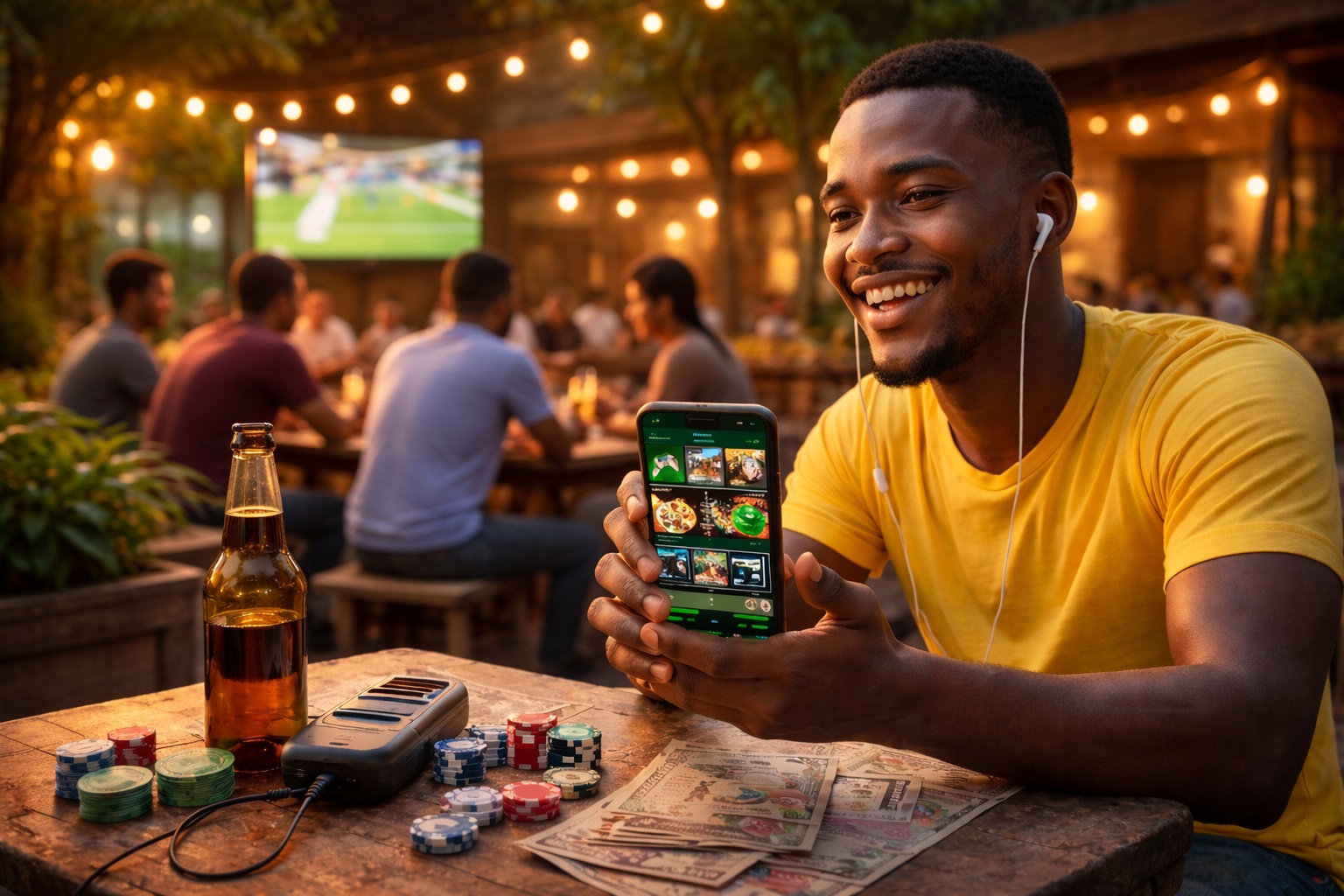
The first time I saw someone place a sports bet in a market in Kumasi, there was no computer, no leather chair, no neon “Casino” sign flickering in the background. There was a tomato seller, a plastic stool, and a cracked Android phone plugged into a power bank the size of a brick.
He wasn’t browsing. He was tapping. Fast. Confident. Like a pianist who had replaced Mozart with match odds.
That was the moment I understood something many European operators still struggle to grasp: in much of Africa, the internet never arrived on desktops. It arrived directly into pockets.
And once gambling followed the internet, casinos followed the pocket too.
The Continent That Skipped the Computer Era
In Europe, online casinos evolved from land-based venues. First came websites designed for large monitors. Then came mobile apps as a convenient side option.
In many African countries, the story ran in reverse.
For millions of users, a smartphone was their first computer.
Owning a laptop can cost several months’ salary in certain regions. A smartphone, however, is different. Entry-level Android devices are everywhere. Markets sell them next to shoes, SIM cards, and fried plantains. Phone repair kiosks appear more frequently than bank branches.
This changed the entire design logic of gambling platforms.
Operators quickly realized a simple fact:
If your casino requires a desktop, it does not exist.
People don’t sit at desks after work. They commute by minibus. They wait in queues. They watch football in open-air bars. The gambling session happens between life’s moments, not inside a scheduled evening at home.
A desktop casino requires attention.
A mobile casino fits into life.
Mobile Money: The Real Engine Behind the Shift
Technology didn’t drive the mobile casino boom alone. Payments did.
Credit cards — the backbone of Western online gambling — are relatively uncommon in large parts of Africa. But something else exploded instead: mobile money.
Services like M-Pesa, MTN MoMo, and Airtel Money transformed phones into bank accounts. Not metaphorically. Literally.
You don’t open a laptop to check your balance.
You dial a code.
You don’t transfer via online banking.
You press a few buttons and confirm with a PIN.
Casinos had a choice: integrate mobile payments or disappear.
Deposits needed to be instant, tiny, and frequent. Players weren’t loading €200 balances. Many deposits were the price of a soft drink. That micro-transaction behavior makes desktop wallets inefficient but makes mobile platforms perfect.
So developers stopped “adapting websites for mobile.”
They started building casinos for mobile first.
Why Apps Beat Websites Here
Western players still often prefer browser casinos. In Africa, apps dominate for practical reasons:
- Data connections can be unstable
- Pages must load fast on low bandwidth
- Phones may have limited memory
- Battery consumption matters
A heavy website struggles. A lightweight app thrives.
A well-built mobile casino can function even on 3G networks. Some platforms compress images, delay animations, and preload betting markets before kickoff. It’s not about aesthetics — it’s about survival.
Think of it less as a luxury experience and more as engineering under constraint. Silicon Valley optimizes for speed. African developers optimize for resilience.
Football: The Cultural Accelerator
Here’s another important element: football.
European online casinos traditionally leaned on slots and table games. African gambling ecosystems grew around sports betting. And sports betting behaves differently.
Matches happen everywhere — at work breaks, roadside cafés, university campuses, taxis stuck in traffic. Players need access instantly when odds shift.
You cannot run to a desktop when a red card changes a match.
You pull out your phone.
This real-time betting culture pushed platforms to operate as live services rather than static gaming websites. Odds refresh continuously, and users check them dozens of times a day. A phone is the only practical device for that behavior.
The Middle of the Story: Platforms Adapting Fast
Operators that understood this early expanded rapidly. Some international brands localized aggressively, adding local payment channels, lightweight interfaces, and support teams operating through messaging apps instead of email.
One example often discussed by players across West Africa is 22Bet. Many users looking for a ghanaian online casino end up encountering it because the platform didn’t just translate text — it adapted infrastructure. Deposits through regional mobile wallets, smaller minimum bets, and simplified menus designed for low-screen devices made it feel less like a foreign website and more like a local tool. In conversations with bettors, the recurring compliment isn’t graphics quality — it’s that “it works even with weak internet.”
That sentence, more than any marketing campaign, explains success in mobile-first markets.
The Social Factor Nobody Talks About
There is another subtle reason mobile casinos thrive: shared usage.
In many households, a computer is communal. A smartphone is personal.
Gambling — whether casual or serious — is a private activity. Players want control over notifications, balances, and sessions. Phones provide discretion. A bet can be placed quietly in a noisy environment without announcing it to everyone around.
And because messaging apps dominate communication, casinos often integrate support directly through chat. Customer service conversations feel like texting a friend, not submitting a ticket.
This humanizes the platform.
Data Costs Change Design Philosophy
Western platforms optimize for visual immersion. African platforms optimize for data economy.
A single megabyte matters.
Animations are shorter. Interfaces are cleaner. Pop-ups are minimized. Some games use simplified graphics intentionally. Not because developers lack skill, but because performance determines retention more than visual spectacle.
If a game eats mobile data, players simply won’t return.
It’s a business reality shaping product design in real time.
What This Means for the Future of Online Gambling
Ironically, Africa may represent the future rather than the exception.
Globally, desktop usage is declining. Younger players everywhere prefer quick interactions over long sessions. Betting during live sports, short gameplay bursts, and instant withdrawals are becoming universal expectations.
African platforms learned these lessons early out of necessity.
The rest of the industry is catching up.
We tend to think technological progress flows from rich markets to developing ones. But sometimes innovation comes from constraint. When you build for limited bandwidth, low-cost devices, and real-world usage, you end up creating systems that are faster, simpler, and more intuitive for everyone.
The Casino That Fits in a Pocket
If Las Vegas is the cathedral of gambling, mobile casinos in Africa are more like street food: quick, accessible, and woven into daily routine. No tuxedo required. No velvet rope. Just a charged battery and a signal bar.
And maybe that’s the real story.
Online gambling didn’t shrink.
It became portable.
Not a destination anymore — just another app on a home screen between WhatsApp and a football scores tracker.
The market didn’t reject casinos.
It redesigned them.
And once gambling fits inside a pocket, it stops being an occasion.
It becomes a habit of the digital day.