
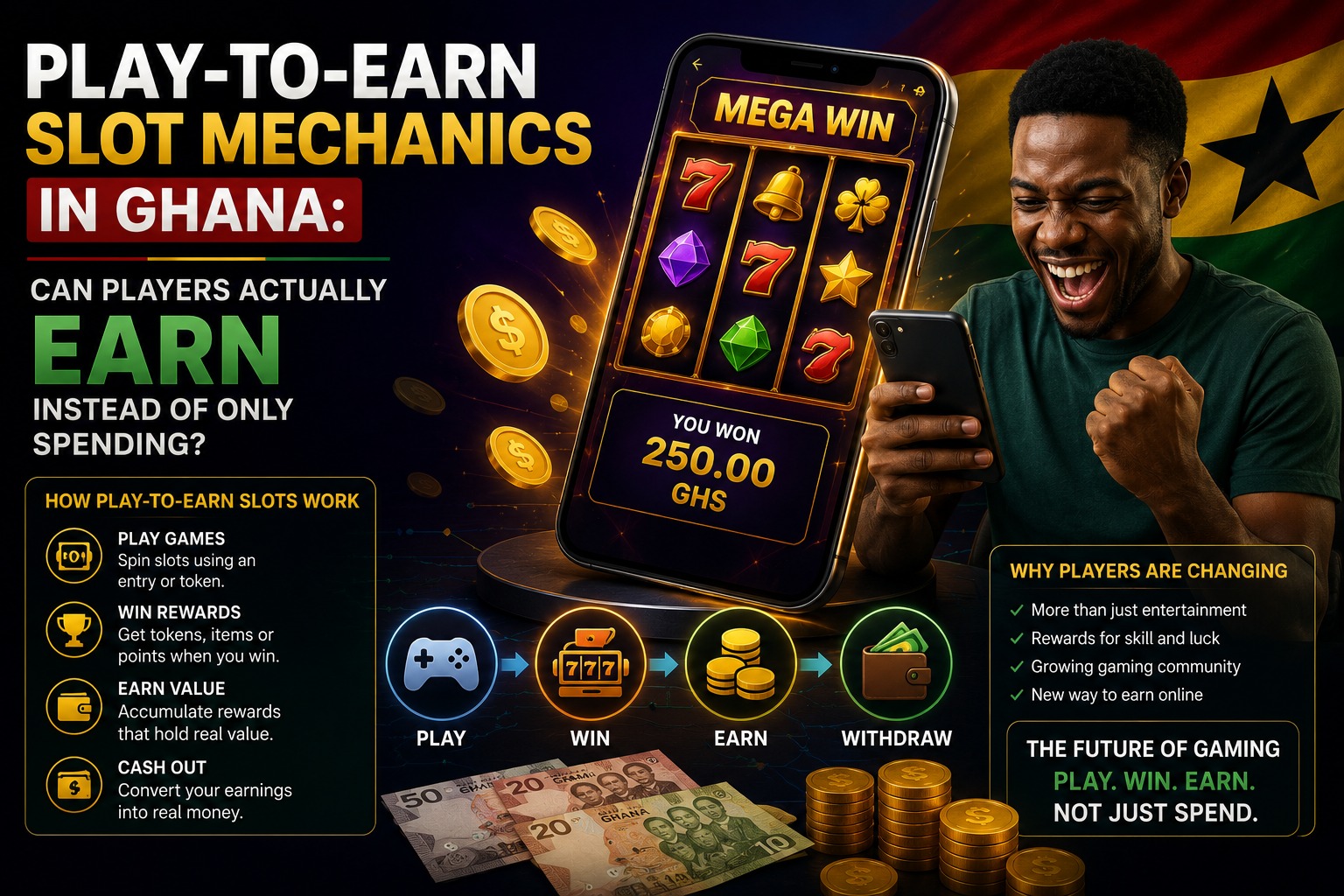
Play-to-Earn slot mechanics in Ghana: can players actually earn instead of only spending?
May 25, 2026
The idea of earning money while playing digital games changed the entire conversation around online entertainment during the last few years. Blockchain gaming, NFT ecosystems, and token-based reward systems introduced a new concept that attracted millions of users globally: Play-to-Earn.
The gambling industry quickly noticed this trend. Slot developers, crypto casinos, and Web3 gambling platforms started experimenting with systems where users could theoretically receive digital rewards, tokens, or tradeable assets while playing. In markets with rapidly growing mobile adoption like Ghana, these ideas gained attention particularly among younger smartphone-first audiences interested in digital finance and online gaming culture.
Many users exploring modern betting ecosystems search platforms through phrases like Paripesa live while comparing mobile accessibility, live gambling environments, and newer interactive features. At the same time, Play-to-Earn mechanics introduced a more provocative question into online gambling discussions: can slot players realistically earn value over time instead of simply spending money?
The answer is complicated.
Some blockchain-based systems genuinely reward activity through tokens or digital assets. However, the psychological and economic reality behind Play-to-Earn gambling is often very different from the optimistic marketing language used during the peak of the Web3 boom.
Understanding how these mechanics work requires looking beyond slogans and examining the behavioral structure behind modern digital gambling ecosystems.
READ ALSO: History of African national teams at World Championship: from dreams to resounding victories
What Play-to-Earn mechanics actually mean
Play-to-Earn refers to systems where users receive some form of digital value while participating in online activities.
In gaming environments, this often involves tokens, NFTs, digital currencies, or tradeable assets that can theoretically be converted into real-world value. Traditional gambling
platforms historically focused only on direct wins and losses. Play-to-Earn models attempt to add an additional reward layer connected to participation itself.
Within slot ecosystems, these mechanics may include:
- token rewards for activity,
- loyalty points convertible into assets,
- NFT collectibles,
- progression-based rewards,
- blockchain-linked bonus systems.
The concept became extremely popular during the rise of Web3 gaming because it blurred the line between entertainment and income generation.
However, there is an important distinction many users misunderstand. Receiving rewards does not automatically mean generating sustainable profit. Most systems still operate around gambling mathematics where long-term house advantage remains present.
The “earning” component usually functions more like ecosystem incentives rather than guaranteed income.
Why younger mobile audiences find the idea attractive
Play-to-Earn mechanics became especially popular among younger digital-native audiences.
In Ghana, smartphone adoption and mobile payment culture expanded rapidly during recent years. Many users already interact daily with digital wallets, online gaming environments, streaming ecosystems, and app-based financial systems. This makes blockchain-linked gambling concepts feel more familiar than they might have seemed a decade ago.
Another important factor involves social media influence.
TikTok creators, YouTube personalities, Telegram communities, and crypto influencers frequently promoted narratives around digital income opportunities connected to gaming and gambling. Viral success stories spread quickly across mobile-first communities.
Several psychological elements make Play-to-Earn particularly appealing:
- the idea of passive income,
- combining entertainment with rewards,
- ownership of digital assets,
- gamified progression systems,
- fear of missing future trends.
The language itself matters too. “Play-to-Earn” sounds fundamentally different from traditional gambling terminology. It frames participation as productive activity rather than pure spending.
That psychological framing significantly changes user perception even when the underlying financial risks remain similar.
How blockchain changed slot ecosystems
Blockchain technology introduced new possibilities for online gambling platforms.
Traditional slot systems usually operate entirely inside centralized casino environments. Blockchain gambling attempted to decentralize parts of this process by integrating tokens, smart contracts, NFTs, and crypto wallets into the ecosystem.
Some slot environments now include external reward economies where users accumulate digital assets beyond ordinary winnings.
These systems may allow participants to:
| Blockchain feature | Purpose inside slot ecosystems |
| Tokens | Activity-based rewards |
| NFTs | VIP access or collectibles |
| Smart contracts | Automated reward distribution |
| Wallet integration | Faster digital transactions |
| Community governance | User engagement incentives |
The integration of blockchain also created stronger links between gambling and broader crypto culture.
For many users, especially younger audiences, the attraction is not only about gambling itself. It involves participation in a larger digital economy connected to Web3 identity, online communities, and speculative digital assets.
This partly explains why Play-to-Earn systems gained so much attention despite high volatility and long-term sustainability concerns.
Can players realistically make consistent profit?
This is where marketing language and mathematical reality often separate dramatically.
Most slot systems — including blockchain-based environments — still operate around house edge principles. The underlying probability structure does not disappear simply because rewards are distributed through tokens or NFTs.
Some users absolutely earned money during early Play-to-Earn expansion phases. However, these gains often depended heavily on:
- early adoption timing,
- token speculation,
- rapid ecosystem growth,
- rising crypto markets,
- new user inflows.
When market growth slowed, many reward systems became far less profitable or collapsed entirely.
Another major issue involves token volatility. A player may technically “earn” digital assets during gameplay while the market value of those assets falls sharply afterward.
The economics resemble speculative digital ecosystems more than stable income systems.
Many platforms also design rewards around retention rather than profitability. Tokens, NFTs, and progression mechanics primarily encourage continued engagement inside the ecosystem.
This does not mean all Play-to-Earn systems are fraudulent. Some projects genuinely attempt to build sustainable digital economies. However, the idea of reliable long-term income from slot gameplay remains extremely unrealistic for most users.
Why behavioral psychology matters so much here
Play-to-Earn mechanics strongly influence player psychology.
Traditional gambling involves clear risk-reward framing. Users understand they are spending money for entertainment with uncertain outcomes. Play-to-Earn systems complicate this perception by introducing productivity language into gambling environments.
Behavioral economists often describe this as motivational reframing.
When users believe they are “earning,” emotional resistance to spending may decrease. Losses can feel psychologically softer if tokens or progression rewards continue appearing during gameplay.
Modern slot ecosystems amplify this effect through:
- achievement systems,
- daily missions,
- progression bars,
- collectible assets,
- reward streaks.
These mechanics resemble mobile gaming structures much more than traditional casino systems.
The brain responds strongly to visible progression and small repeated rewards. Even low-value token distributions can maintain engagement because they create continuous feedback loops.
This explains why Play-to-Earn systems often feel emotionally different from classic gambling environments despite relying on similar mathematical foundations underneath.
Why mobile-first behavior accelerated adoption
Smartphones played a massive role in spreading Play-to-Earn gambling concepts.
In Ghana, mobile devices became the center of digital entertainment, payments, and online interaction. Users constantly move between messaging apps, social media, mobile games, livestreams, and gambling platforms throughout the day.
Play-to-Earn systems fit perfectly into this environment because they combine several familiar digital behaviors simultaneously:
- gaming,
- rewards,
- digital finance,
- social interaction,
- speculative assets.
The mobile ecosystem also supports shorter but more frequent interaction cycles. Many users participate through quick sessions rather than long traditional casino visits.
Push notifications, token updates, daily rewards, and limited-time events reinforce constant engagement patterns.
Developers intentionally design these systems around smartphone behavior. Interfaces prioritize simplicity, visual stimulation, and rapid reward feedback optimized for mobile attention spans.
Why many Play-to-Earn gambling projects failed
A large number of early Web3 gambling ecosystems eventually struggled or disappeared.
The biggest problem involved sustainability.
Many reward systems depended heavily on continuous growth of new participants entering the ecosystem. Once expansion slowed, token value often dropped sharply because demand weakened while reward distribution continued.
Another issue involved speculative hype.
Some projects focused more on attracting investors and generating attention than building stable long-term economies. During crypto bull markets, this strategy temporarily worked. When market conditions changed, many ecosystems became financially unstable.
User expectations also played a role. Marketing often implied consistent earning potential that realistic gambling mathematics could not support long-term.
The result was growing skepticism toward Play-to-Earn narratives across the broader gambling market.
Today, surviving projects usually focus more on entertainment and ecosystem engagement rather than promising income opportunities directly.
What the future may look like in Ghana
Play-to-Earn mechanics probably will not disappear completely.
Instead, the industry seems to be shifting toward hybrid systems where blockchain rewards function as secondary engagement tools rather than primary income promises.
In Ghana, where mobile gambling and digital finance continue growing rapidly, younger audiences will likely remain interested in systems combining gaming, crypto culture, and interactive rewards.
Future ecosystems may focus more on:
- loyalty integration,
- collectible digital assets,
- community tournaments,
- tokenized VIP systems,
- blockchain payment efficiency.
At the same time, users are becoming more cautious after seeing many early Web3 projects collapse.
The long-term future of Play-to-Earn gambling will probably depend less on speculative hype and more on whether platforms can create sustainable ecosystems that provide entertainment value first.
The central reality remains difficult to avoid: slot mechanics are still designed around probability and house advantage. Blockchain technology may change the structure of rewards, but it does not magically eliminate gambling mathematics.
FAQ
What does Play-to-Earn mean in slot games?
It refers to systems where players receive digital rewards such as tokens, NFTs, or blockchain assets while participating in gameplay.
Can people really earn money from Play-to-Earn slots?
Some users have earned money, especially during early crypto growth phases, but long-term consistent profit is highly unreliable and heavily dependent on market conditions.
Why are Play-to-Earn mechanics popular in mobile gambling?
They combine gaming, digital rewards, crypto culture, and smartphone-friendly interaction into one ecosystem optimized for modern mobile behavior.