

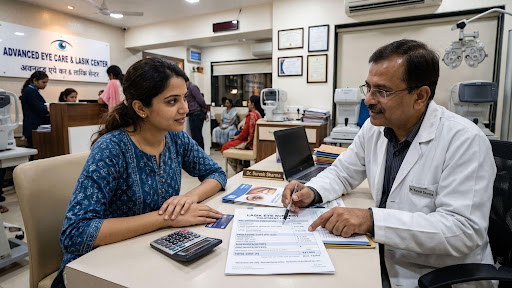
Clearer vision can make everyday routines feel easier, from reading road signs to working comfortably on a screen. For people considering LASIK, however, the treatment journey is rarely identical from one patient to another.
Eye condition, treatment requirements, technology, clinical expertise, and aftercare can all shape the overall expense. Understanding what goes into the pricing helps patients look beyond a single quoted amount and consider the quality, suitability, and completeness of the care they receive.
Type of Vision Correction Needed
Every pair of eyes has different correction requirements. Some patients may be suitable for standard LASIK surgery, while others may need a different form of laser vision correction based on their eye health and visual needs. The recommended procedure can therefore influence treatment costs.
READ ALSO: Suchbegriffe als Frühwarnsystem für lokale Google-Ads-Kampagnen
Severity of Refractive Error
The degree and type of refractive error can affect how a treatment plan is designed. More individualised correction may require additional assessment and planning. For this reason, the LASIK cost should be considered in relation to a patient’s specific prescription rather than as a fixed amount.
Technology and LASIK Technique Used
Different methods of laser eye surgery may involve different equipment, planning systems, and treatment approaches. Advanced diagnostic and laser technologies can help doctors personalise the procedure according to the eye’s characteristics. The technique recommended by the ophthalmologist may consequently affect the LASIK eye surgery cost.
Surgeon’s Expertise and Experience
The ophthalmologist’s clinical experience also contributes to the overall treatment value. LASIK requires careful patient selection, detailed planning, and precise execution. Experienced surgeons may bring extensive knowledge of different eye conditions and treatment approaches, which can be an important consideration when evaluating overall care.
Hospital Infrastructure and Facilities
A well-equipped eye hospital may have dedicated diagnostic systems, laser technology, sterilisation protocols, and trained clinical teams supporting the procedure. These facilities form part of the wider treatment experience and may influence pricing while also helping maintain appropriate standards of patient care.
Pre-Surgery Eye Evaluation and Diagnostic Tests
LASIK suitability cannot be determined from a spectacle prescription alone. A detailed eye evaluation may assess the cornea, refractive error, tear film, and other aspects of ocular health. The tests recommended can vary between patients depending on their eyes and medical history.
Post-Surgery Care and Follow-Up Services
Care does not end immediately after the procedure. Follow-up consultations allow the doctor to check healing, monitor vision, and address concerns that may arise during recovery. Some treatment packages may include these appointments, medicines, or additional support, while others may structure them separately.
Geographic Location and Overall Treatment Package
Treatment expenses can also vary between hospitals and locations. Infrastructure, clinical services, technology, consultation processes, and the contents of the treatment package may all differ. Patients should therefore understand what a quoted amount covers instead of comparing prices without considering the services provided.
Conclusion
LASIK pricing varies because the procedure is tailored to the individual rather than being the same for every patient. Eye condition, correction requirements, technology, surgeon expertise, diagnostic testing, facilities, and follow-up care can all contribute to the final expense.
A comprehensive eye examination and consultation can help patients understand which treatment is suitable for them, what the proposed package includes, and why its cost may differ from another patient’s experience.