


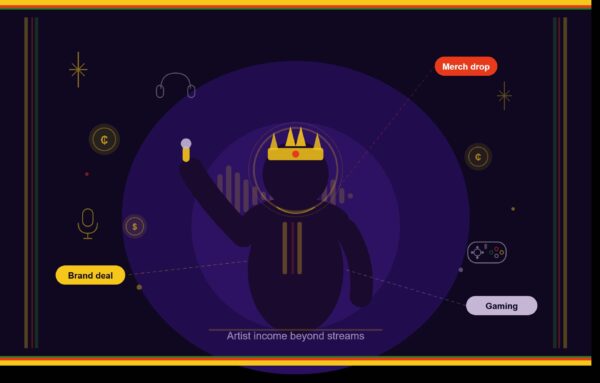
Streaming money on its own isn’t building anybody’s mansion in East Legon. A million streams looks great on Instagram, but once the platforms, distributors and labels have taken their cut, what actually lands in the artist’s account can be painfully small. So the smartest names in Ghanaian music have stopped treating streams as the main course. For them the music is the advert. The money is in what the music unlocks.
And nothing unlocks bags right now like a brand partnership. The telcos, the beverage companies and the fashion labels have been at it for years. The newer money is betting and gaming, and those brands are pushing their way to the front fast.
How do musicians make money besides streaming?
The income sheet of a Ghanaian artist looks nothing like it did ten years ago. Show fees and international bookings still sit at the top for the A-list, and a strong December in Accra can outearn a whole year of streaming royalties. Below that you’ve got endorsement deals, ambassadorial roles, appearance fees, merch, publishing, and sync placements when a track ends up in an advert or a film.
READ ALSO: Mzbel to Release All-Female EP – Manager Mod Dee Reveals
Music In Africa has tracked this shift right across the continent. Recorded-music revenue is growing, but it stays thin per stream, so African artists are diversifying harder and faster than almost anyone else. The IFPI Global Music Report keeps putting Sub-Saharan Africa among the fastest-growing recorded-music regions in the world. But fast growth on paper and real money in your pocket are two different things, and the deals are what close the gap.
Why are betting and gaming brands signing Ghanaian artists?
Because the audiences line up almost exactly. The young, mobile-first fans streaming Hiplife, Afrobeats and dancehall are the same people the gaming industry is chasing. Put a superstar’s face on a campaign and a betting brand isn’t only paying for fame. It’s paying for trust, and for relevance with an audience that skips every ordinary advert.
That’s why ambassadorial deals, sponsored concerts and branded online campaigns are now a fixture. Ghana’s gaming sector has turned into a serious economic player, with dozens of licensed operators chasing the same customers, and comparison platforms like online-casinos.com/ghana watch that market closely as new brands launch and budgets swell. For artists, all that competition is leverage. The more operators fighting for attention, the more the right face is worth.
These deals also go well past a photoshoot. Artists headline brand-sponsored festivals, drop exclusive freestyles for campaigns, and front fan promotions where the prizes are concert tickets and meet-and-greets. When it’s done right, everyone gets something out of it. The brand gets culture, the artist gets paid, and fans get shows that ticket sales alone would probably never have funded.
Is it all smooth sailing?
Not quite, and the artists know it. Gaming partnerships carry reputational questions, especially for acts with younger fans or gospel-leaning audiences. Some turn the deals down flat. Others sign but insist on responsible-play messaging in the campaign. The conversation has grown up: a deal isn’t judged on the cheque alone anymore, but on whether it still fits the artist a few years down the line.
Then there’s exclusivity. Sign with one operator and every rival is off the table for the life of the contract, sometimes including telcos and fintechs that have gaming arms of their own. Managers now fight over those clauses as hard as they fight over the fee.
What it means for the next generation
For acts on the way up, the lesson from the top is simple: build the audience first, because the audience is the thing brands are actually buying. Look at Shatta Wale’s recent sponsorship moves. He isn’t just taking brand money, he’s turning his own ventures like Shaxi into sponsorship vehicles. That’s the endgame: the artist becomes the brand doing the signing. The streams might not pay the bills directly, but they’re the receipts that get the real deals over the line.
The days of the artist as a pure musician are pretty much gone. A Ghanaian star today runs something closer to a media company with a catalogue attached, and the ones cashing in are the ones who figured that out early.